Discover Advanced Data Visualization Solutions: Interactive Tools and Business Intelligence Insights
In the rapidly evolving landscape of data analytics, advanced data visualization solutions have emerged as essential tools for organizations seeking to harness the power of their data. These solutions transform complex datasets into interactive visual formats, enabling users to derive actionable insights quickly and effectively. This article delves into the key features of interactive data visualization tools, the role of business intelligence dashboards, and the future trends shaping this dynamic field. By understanding these elements, organizations can make informed decisions about their data strategies and enhance their overall performance.
The increasing volume of data generated daily presents both challenges and opportunities for businesses. Advanced data visualization solutions offer a way to navigate this complexity, providing clarity and facilitating better decision-making. This article will explore the essential features of these tools, the benefits they bring to business intelligence, and how organizations can select the right solutions to meet their needs. Additionally, we will discuss emerging trends that are set to shape the future of data visualization in the coming years.
What Are the Key Features of Interactive Data Visualization Tools?
Interactive data visualization tools are designed to enhance user engagement and facilitate deeper data exploration. These tools typically offer several key features that make them effective in presenting complex information in an accessible manner.
- Customizability: Users can tailor visualizations to meet specific needs, allowing for a more personalized experience.
- Real-Time Data Updates: These tools can display live data, ensuring that users have access to the most current information.
- Drill-Down Capabilities: Users can click on visual elements to access more detailed data, enabling deeper analysis.
- Integration with Other Tools: Many visualization tools can connect with existing software, enhancing their functionality and usability.
These features collectively empower users to interact with data in meaningful ways, leading to more informed decision-making.
How Do Interactive Dashboards Enhance Data Exploration?
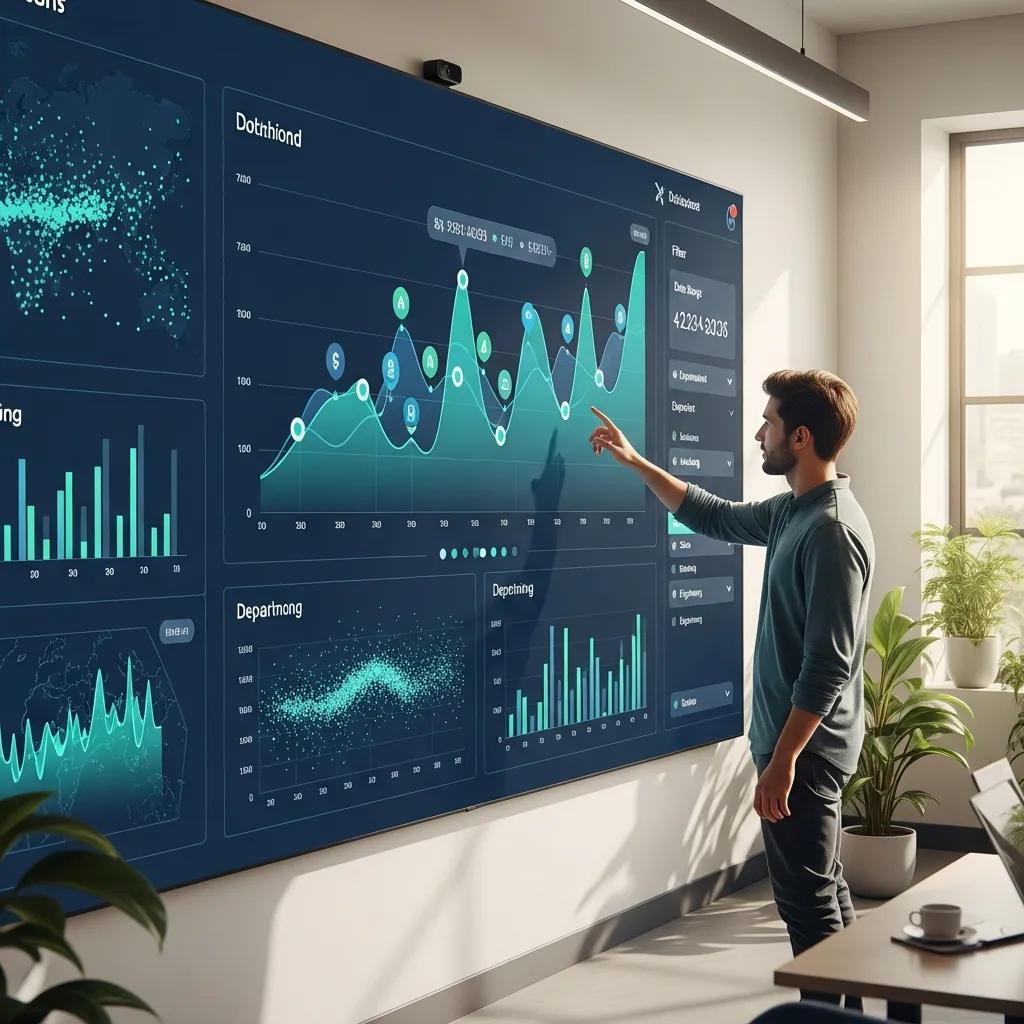
Interactive dashboards serve as a central hub for data analysis, allowing users to visualize and manipulate data dynamically. By providing dynamic visualizations, these dashboards enhance user engagement and facilitate real-time insights. Users can explore various data dimensions, uncover trends, and identify anomalies, all of which contribute to a more comprehensive understanding of the data landscape.
Which Technologies Support Real-Time Data Analytics?
Several technologies underpin real-time data analytics, enabling organizations to process and visualize data as it is generated. Key technologies include:
- Cloud Computing: Offers scalable resources for data storage and processing, allowing for efficient real-time analytics.
- Big Data Technologies: Frameworks like Hadoop and Spark facilitate the handling of large datasets, making real-time analysis feasible.
- Streaming Analytics: Tools that process data streams in real-time, providing immediate insights and enabling timely decision-making.
These technologies are crucial for organizations aiming to leverage real-time data for competitive advantage.
How Do Business Intelligence Dashboards Improve Decision Making?
Business intelligence dashboards play a pivotal role in enhancing decision-making processes within organizations. By consolidating data from various sources into a single view, these dashboards provide real-time insights that inform strategic choices.
- Real-Time Insights: Dashboards deliver up-to-date information, allowing decision-makers to respond swiftly to changing conditions.
- Data Visualization Benefits: Visual representations of data make complex information easier to understand, facilitating quicker comprehension and analysis.
- User Engagement: Interactive elements encourage users to explore data, leading to more thorough analysis and better-informed decisions.
These benefits underscore the importance of business intelligence dashboards in modern organizational strategies.
What Benefits Do Visual Analytics Software Offer to Businesses?
Visual analytics software provides numerous advantages that can significantly impact business performance. Key benefits include:
- Enhanced Data Understanding: Visualizations simplify complex data, making it easier for users to grasp insights.
- Improved Decision-Making: By presenting data in an intuitive format, these tools support faster and more accurate decision-making.
- Increased Collaboration: Shared visualizations foster collaboration among teams, enabling collective insights and strategies.
These benefits highlight the value of investing in visual analytics software for organizations looking to optimize their data utilization.
How Is Data Storytelling Used to Communicate Insights Effectively?
Data storytelling combines data visualization with narrative techniques to convey insights compellingly. This approach enhances engagement and retention of information by framing data within a relatable context. Effective data storytelling employs visual aids, such as charts and graphs, to illustrate key points while using narrative strategies to guide the audience through the data. This method not only makes the data more accessible but also helps to highlight the significance of the insights being presented.
What Are the Leading Types of Advanced Data Visualization Solutions?
Advanced data visualization solutions come in various forms, each designed to meet specific analytical needs. Understanding these types can help organizations choose the right tools for their requirements.
- Business Intelligence Tools: These platforms provide comprehensive analytics capabilities, integrating data from multiple sources for in-depth analysis.
- Dashboard Software: Focused on real-time data visualization, these tools allow users to create interactive dashboards tailored to their needs.
- Data Discovery Tools: These solutions enable users to explore data sets and uncover insights through intuitive visualizations.
How Do Software Platforms Compare in Features and Integration?
| Platform Type | Key Features | Integration Capabilities |
|---|---|---|
| Business Intelligence Tools | Comprehensive analytics, data blending | High integration with various data sources |
| Dashboard Software | Real-time updates, customizable dashboards | Seamless integration with existing tools |
| Data Discovery Tools | Interactive exploration, user-friendly interfaces | Flexible integration options |
This comparison illustrates how different platforms cater to varying analytical needs, helping organizations make informed choices.
What Role Does AI Play in Emerging Visualization Technologies?
Artificial intelligence (AI) is increasingly influencing the development of advanced data visualization technologies. AI-driven insights enhance the analytical capabilities of visualization tools by automating data processing and identifying patterns that may not be immediately apparent. Additionally, AI can facilitate predictive analytics, allowing organizations to forecast trends and make proactive decisions based on data-driven insights. As AI continues to evolve, its integration into data visualization will likely lead to even more sophisticated analytical capabilities.
Indeed, studies confirm that AI-enhanced business intelligence dashboards significantly improve predictive market strategies.
AI-Enhanced BI Dashboards for Predictive Market Strategy
This study examined whether AI-enhanced business intelligence (BI) dashboards measurably improve predictive market strategy in U.S. enterprises. The AI dashboard integrated model-generated demand forecasts, prescriptive nudges, and natural-language querying; the control condition used feature-parity descriptive BI without predictive or prescriptive components.
AI-enhanced business intelligence dashboards for predictive market strategy in US enterprises, MJI Saidur, 2025
How Can Organizations Choose the Right Data Visualization Solution?
Selecting the appropriate data visualization solution is crucial for maximizing the benefits of data analytics. Organizations should consider several criteria when making their choice.
- User Needs: Understanding the specific requirements of users is essential for selecting a tool that meets their analytical needs.
- Budget Considerations: Organizations must evaluate the cost of solutions against their budget constraints to ensure a viable investment.
- Scalability: The chosen solution should be able to grow with the organization, accommodating increasing data volumes and user demands.
What Criteria Should Guide the Selection of Visualization Tools?
- Ease of Use: The tool should be user-friendly, allowing users to create visualizations without extensive training.
- Integration Capabilities: It should seamlessly integrate with existing data sources and software.
- Support and Training: Adequate support and training resources should be available to assist users in maximizing the tool’s potential.
These criteria will help organizations identify solutions that align with their operational needs and enhance their data analytics capabilities.
How Do Industry Trends Influence Visualization Platform Adoption?
Industry trends play a significant role in shaping the adoption of visualization platforms. As organizations increasingly recognize the value of data-driven decision-making, the demand for advanced visualization solutions continues to grow. Key trends influencing this adoption include:
- Market Growth: The expanding data landscape drives the need for effective visualization tools.
- Technological Advancements: Innovations in AI and machine learning enhance the capabilities of visualization platforms.
- User Expectations: As users become more data-savvy, they expect intuitive and powerful visualization tools that can meet their analytical needs.
These trends highlight the importance of staying current with industry developments to ensure organizations select the most effective visualization solutions.
What Are Future Trends in Advanced Data Visualization for 2026?
Looking ahead to the next few years, several trends are poised to shape the future of advanced data visualization. Organizations must stay informed about these developments to remain competitive in the data-driven landscape.
A key aspect of these future trends involves the seamless integration of AI-driven data visualization with predictive analytics within business intelligence systems.
AI-Driven Data Visualization for Predictive Business Intelligence
Furthermore, AI-driven data visualization tools facilitate the integration of predictive analytics and data visualization within business intelligence systems, enhancing predictive analytics and data visualization capabilities.
Integrating artificial intelligence with cloud business intelligence: Enhancing predictive analytics and data visualization, S Chinta, 2022
- AI-Driven Visualization: The integration of AI will continue to enhance visualization capabilities, enabling more sophisticated data analysis and insights.
- Real-Time Analytics: The demand for real-time data processing will drive the development of more advanced visualization tools that can handle live data streams.
- User-Centric Design: As user experience becomes increasingly important, visualization tools will focus on intuitive designs that facilitate easy data exploration.
How Will AI-Driven Visualization Transform Business Intelligence?

AI-driven visualization is set to revolutionize business intelligence by automating data analysis and providing deeper insights. This transformation will enable organizations to make faster, more informed decisions based on predictive analytics and real-time data processing. As AI technologies continue to advance, their integration into business intelligence will likely lead to more personalized and actionable insights, enhancing overall organizational performance.
This transformation is further supported by research highlighting how AI-driven interactive data visualization converts complex datasets into understandable and actionable insights.
AI-Driven Interactive Data Visualization for Actionable Insights
This is one of the key benefits of AI-driven data visualization; complex data sets are transformed into understandable insights, integrating AI-driven predictive analytics with interactive data visualization.
Review on AI-Driven Interactive Data Visualization and Predictive Analytics for Enhanced Decision Support in Health and Disease Management, A Jain, 2024
What Is the Impact of Real-Time Analytics on Data Storytelling?
Real-time analytics significantly enhances data storytelling by providing immediate insights that can be woven into narratives. This immediacy allows organizations to respond to emerging trends and communicate insights effectively. By incorporating real-time data into storytelling, organizations can create more engaging and relevant narratives that resonate with their audience, ultimately driving better decision-making and strategic planning.